
Lokomat
Reha-Klinik
Anwendungskontext
Der Lokomat ist ein Gangroboter, der Patientinnen und Patienten bei der Rehabilitation bei unterschiedlich schwerem Beeinträchtigungsgrad zum Beispiel bei einer neurologischen Erkrankung, unterstützen kann.
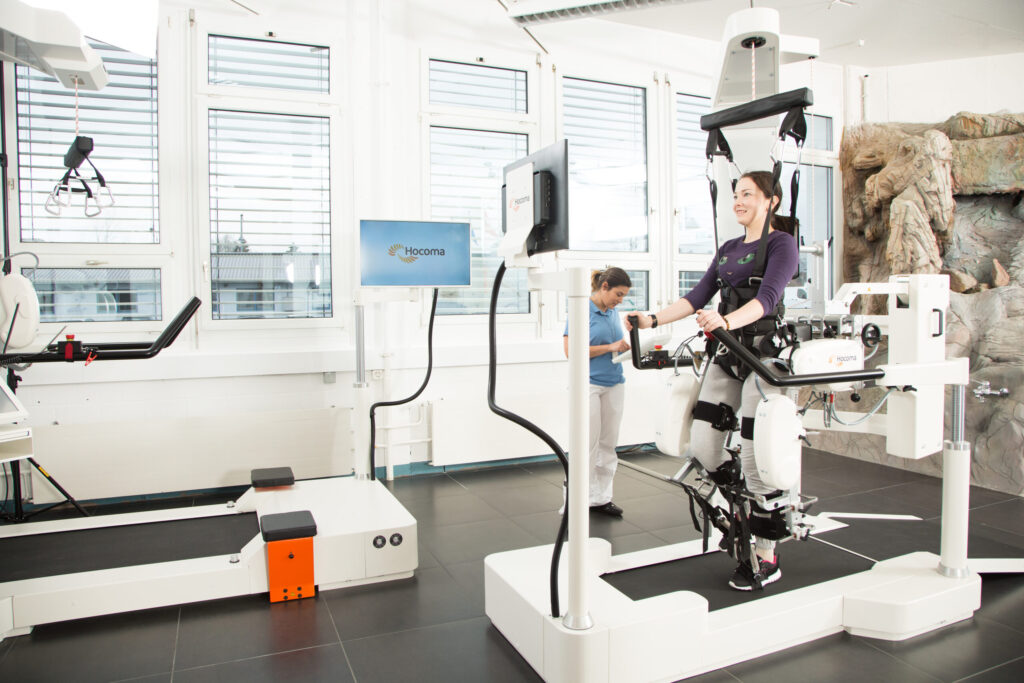
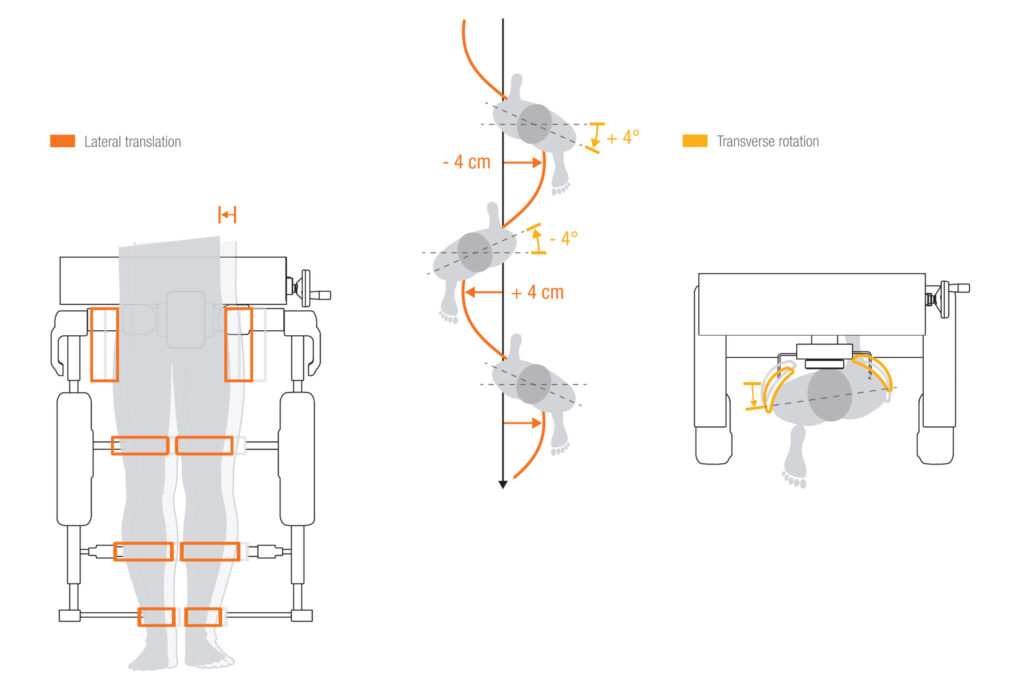
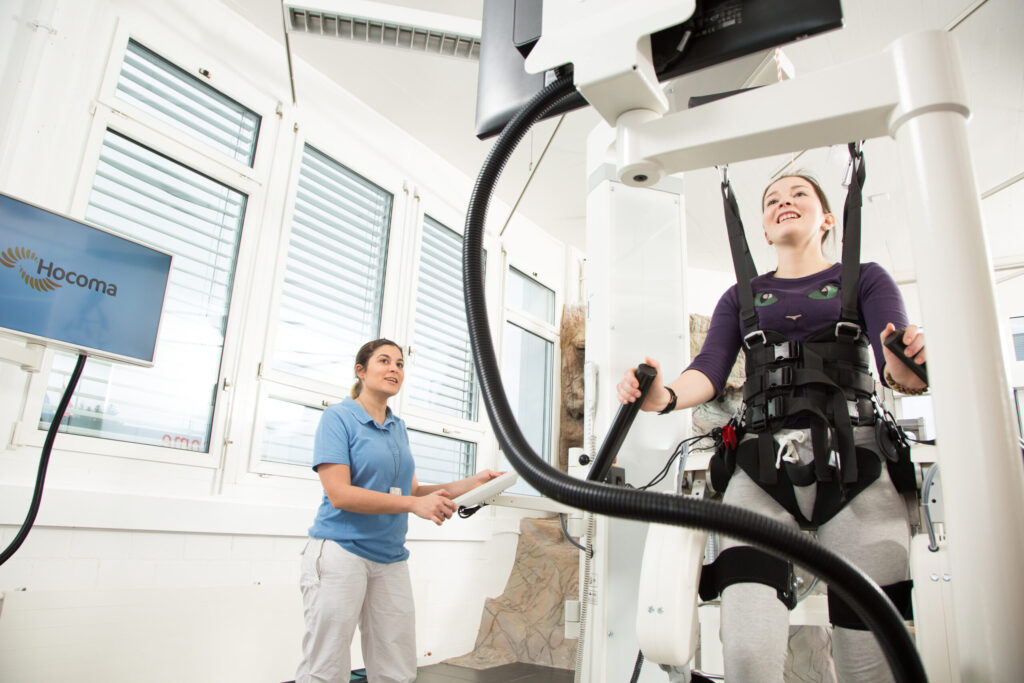
Bildquellen: hocoma.com
Auswahl & Details
17+ Spiele
Spieleauswahl
-
Schneller!
-
Überflieger
-
Tanz!
-
Eis-Hüpfer
-
Audio Cueing
-
Wanderer
-
Biofeedback Graph
-
Kurvenverfolger
-
Gabarello
-
Schnappschuss
-
Insel Rundgang
-
Adaptiver Gang Support
-
Halte den Kurs
-
Lächeln!
-
BWS
-
BWS & Geschwindigkeit
-
Geschwindigkeit
-
Schätze
grosse Investition
Kosten
Fachhandel
Erhältlich via
Forschung
Institutionen
Entwicklung: Hocoma AG, www.hocoma.com
Quellen
2024
-
Alyahyaee, M. O. S., Cheong, J., & Kim, M. (2024). The feasibility and effect of robot-assisted gait training frequency on gait functions in children with cerebral palsy – A single blinded, randomized pilot study. Fizjoterapia Polska, 24(1), 297–303. https://doi.org/10.56984/8ZG2EF8iRS
-
Cheung, E. Y. Y., Yu, K. K. K., Kwan, R. L. C., Ng, C. K. M., Chau, R. M. W., & Cheing, G. L. Y. (2019). Effect of EMG-biofeedback robotic-assisted body weight supported treadmill training on walking ability and cardiopulmonary function on people with subacute spinal cord injuries – a randomized controlled trial. BMC Neurology, 19(1), 140. https://doi.org/10.1186/s12883-019-1361-z
-
Aurich-Schuler, T., & Labruyère, R. (2019). An Increase in Kinematic Freedom in the Lokomat Is Related to the Ability to Elicit a Physiological Muscle Activity Pattern: A Secondary Data Analysis Investigating Differences Between Guidance Force, Path Control, and FreeD. Frontiers in Robotics and AI, 6, 109. https://doi.org/10.3389/frobt.2019.00109
-
Feys, P., & Straudi, S. (2019). Beyond therapists: Technology-aided physical MS rehabilitation delivery. Multiple Sclerosis Journal, 25(10), 1387–1393. https://doi.org/10.1177/1352458519848968
-
Cherni, Y., Ballaz, L., Girardin-Vignola, G., & Begon, M. (2021). Intra- and inter-tester reliability of spasticity assessment in standing position in children and adolescents with cerebral palsy using a paediatric exoskeleton. Disability and Rehabilitation, 43(7), 1001–1007. https://doi.org/10.1080/09638288.2019.1646814
-
Esquenazi, A., & Talaty, M. (2019). Robotics for Lower Limb Rehabilitation. Physical Medicine and Rehabilitation Clinics of North America, 30(2), 385–397. https://doi.org/10.1016/j.pmr.2018.12.012
-
Qaiser, T., Eginyan, G., Chan, F., & Lam, T. (2019). The sensorimotor effects of a lower limb proprioception training intervention in individuals with a spinal cord injury. Journal of Neurophysiology, 122(6), 2364–2371. https://doi.org/10.1152/jn.00842.2018
-
Bodenhagen, L., Suvei, S.-D., Juel, W. K., Brander, E., & Krüger, N. (2019). Robot technology for future welfare: Meeting upcoming societal challenges – an outlook with offset in the development in Scandinavia. Health and Technology, 9(3), 197–218. https://doi.org/10.1007/s12553-019-00302-x
-
Sattelmayer, M., Chevalley, O., Steuri, R., & Hilfiker, R. (2019). Over-ground walking or robot-assisted gait training in people with multiple sclerosis: Does the effect depend on baseline walking speed and disease related disabilities? A systematic review and meta-regression. BMC Neurology, 19(1), 93. https://doi.org/10.1186/s12883-019-1321-7
-
Schröder, J., Truijen, S., Criekinge, T., & Saeys, W. (2019). Feasibility and effectiveness of repetitive gait training early after stroke: A systematic review and meta-analysis. Journal of Rehabilitation Medicine, 51(2), 78–88. https://doi.org/10.2340/16501977-2505
2021
-
Cherni, Y., Ballaz, L., Girardin-Vignola, G., & Begon, M. (2021). Intra- and inter-tester reliability of spasticity assessment in standing position in children and adolescents with cerebral palsy using a paediatric exoskeleton. Disability and Rehabilitation, 43(7), 1001–1007. https://doi.org/10.1080/09638288.2019.1646814
2019
-
Cheung, E. Y. Y., Yu, K. K. K., Kwan, R. L. C., Ng, C. K. M., Chau, R. M. W., & Cheing, G. L. Y. (2019). Effect of EMG-biofeedback robotic-assisted body weight supported treadmill training on walking ability and cardiopulmonary function on people with subacute spinal cord injuries – a randomized controlled trial. BMC Neurology, 19(1), 140. https://doi.org/10.1186/s12883-019-1361-z
-
Aurich-Schuler, T., & Labruyère, R. (2019). An Increase in Kinematic Freedom in the Lokomat Is Related to the Ability to Elicit a Physiological Muscle Activity Pattern: A Secondary Data Analysis Investigating Differences Between Guidance Force, Path Control, and FreeD. Frontiers in Robotics and AI, 6, 109. https://doi.org/10.3389/frobt.2019.00109
-
Feys, P., & Straudi, S. (2019). Beyond therapists: Technology-aided physical MS rehabilitation delivery. Multiple Sclerosis Journal, 25(10), 1387–1393. https://doi.org/10.1177/1352458519848968
-
Esquenazi, A., & Talaty, M. (2019). Robotics for Lower Limb Rehabilitation. Physical Medicine and Rehabilitation Clinics of North America, 30(2), 385–397. https://doi.org/10.1016/j.pmr.2018.12.012
-
Qaiser, T., Eginyan, G., Chan, F., & Lam, T. (2019). The sensorimotor effects of a lower limb proprioception training intervention in individuals with a spinal cord injury. Journal of Neurophysiology, 122(6), 2364–2371. https://doi.org/10.1152/jn.00842.2018
-
Bodenhagen, L., Suvei, S.-D., Juel, W. K., Brander, E., & Krüger, N. (2019). Robot technology for future welfare: Meeting upcoming societal challenges – an outlook with offset in the development in Scandinavia. Health and Technology, 9(3), 197–218. https://doi.org/10.1007/s12553-019-00302-x
-
Sattelmayer, M., Chevalley, O., Steuri, R., & Hilfiker, R. (2019). Over-ground walking or robot-assisted gait training in people with multiple sclerosis: Does the effect depend on baseline walking speed and disease related disabilities? A systematic review and meta-regression. BMC Neurology, 19(1), 93. https://doi.org/10.1186/s12883-019-1321-7
-
Schröder, J., Truijen, S., Criekinge, T., & Saeys, W. (2019). Feasibility and effectiveness of repetitive gait training early after stroke: A systematic review and meta-analysis. Journal of Rehabilitation Medicine, 51(2), 78–88. https://doi.org/10.2340/16501977-2505
Weitere Geräte
C-Mill
Reha-KlinikAnwendungskontext Die C-Mill besteht aus einem Laufband, das mit oder ohne...
ddrobotec®
Leistungssportzentrum, Physiotherapie, Longevity-CenterAnwendungskontext Das Gerät von ddrobotec®...
CAREN
Reha-KlinikAnwendungskontext Die Computer-assistierte Rehabilitationsumgebung CAREN besteht aus...
Bleiben Sie am Ball!
Und sichern Sie sich einen Platz in einem unserer Workshops!